Planning
Rock River Vermont visitor questions
Short answers to the questions people type before they go—parking, the trail, rain, what to pack, the queer-friendly shore, and the Newfane / Dummerston / Brattleboro label tangle. Jump to a question, then follow out to conditions, the map, and visit when you need detail.
Start here
What is Rock River Vermont?
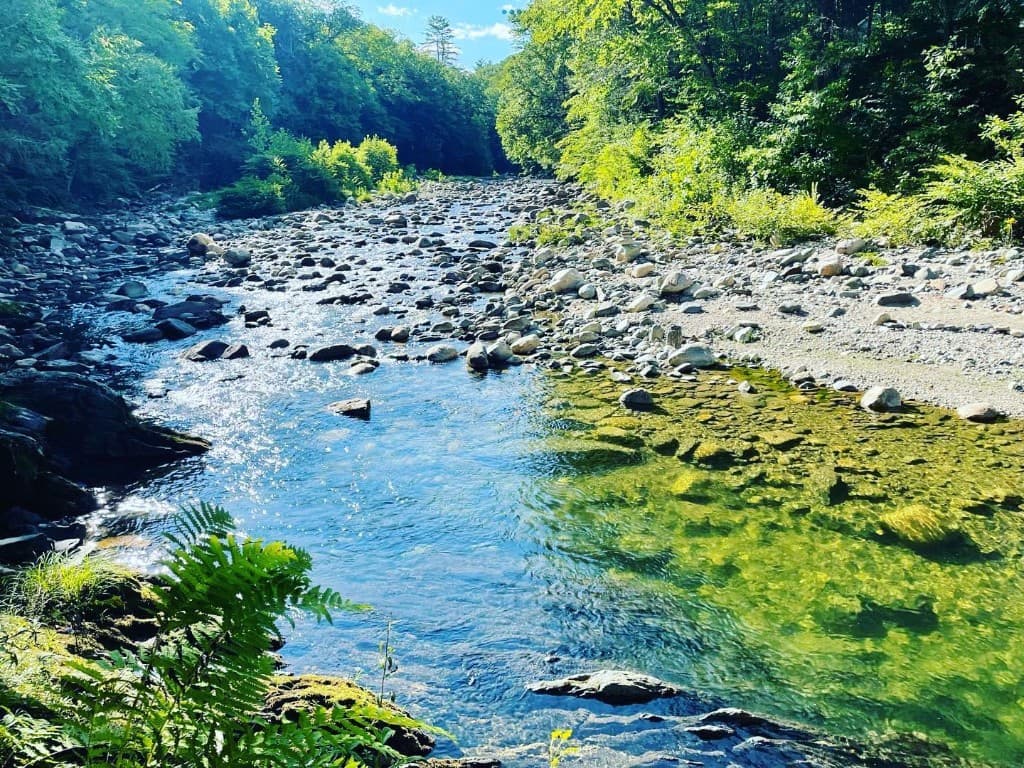
Rock River is a cold, rocky southern Vermont river corridor known for woods trails, ledges, clear pools, sandy banks, and long-standing local recreation near Newfane and Windham County. For the broader place story, read Learn Rock River and Land & River.
Where is Rock River?
Visitors usually mean the lower Rock River corridor near Newfane, Dummerston, Route 30, Depot Road, and the West River area. Town labels can be confusing, so plan with the Rock River map and save directions before you lose cell service.
Is Rock River an official town or agency site?
No. RockRiverVT is an independent visitor guide. Official stewardship, posted rules, volunteer onboarding, and nonprofit policy belong with Rock River Preservation. Start with the Preservation overview and the official resource links.
What page should I read first?
First-time visitors should start with Visit Rock River Vermont. That page covers the river-day flow: check conditions, match a parking pin, walk in, read the water, share the shore, and pack out everything.
What should I check before leaving home?
Check recent rain, water clarity, river flow context, daylight, trail footing, bugs, parking pressure, and posted guidance. Use Rock River Today for a quick read and Conditions for the deeper snapshot.
Parking and directions
Where do I park for Rock River?
Use marked Route 30 pull-offs near Depot Road on the Dummerston side. Do not block driveways, gates, road paint, shoulders, or emergency access. Read the parking guide before driving.
Why do some pages say Newfane while parking points toward Dummerston?
Rock River is commonly associated with Newfane, but the practical visitor parking landmark is the Route 30 and Depot Road corridor on the Dummerston side. Use the map, not just a town name.
Can I rely on GPS alone?
No. GPS can get you near the corridor, but it may not choose a legal or respectful pull-off. Open the Rock River map, save directions, then follow posted signs and road paint on site.
What happens if parking is full?
Choose another plan. A full pull-off usually means a crowded trail and shore. Do not create overflow parking, block homes, or invent a spot. Use nearby places or After Rock River for other local context.
How long is the walk from parking to the river?
Many visitors reach the main river area in about 5 to 10 minutes, but the tread is uneven and can be muddy, rooty, or slick after rain. Read Visit and Conditions before treating the walk as easy for everyone.
Swimming and safety
Is Rock River safe to swim today?
No website can clear a natural river for you. Check Rock River Today, Conditions, and Water Safety, then trust what you see at the bank. If the water looks fast, brown, cloudy, cold, or wrong, skip swimming.
Are there lifeguards at Rock River?
No. Rock River is a natural outdoor setting with no lifeguards. Read Water Safety, avoid diving into unfamiliar water, and keep your own exit path in mind.
Is Rock River safe after heavy rain?
Do not assume so. Heavy rain can raise current, stir bacteria, hide debris, and make ledges slick. The safer baseline is to choose another day after significant rain and use Conditions plus what you see in person.
Is E. coli testing real-time?
No. Water-quality sampling is useful context, but it is not a live reading for every pool. Use sampling resources, recent rain, clarity, flow, and your own bank-side judgment together. Start with Water Safety and Conditions.
What water signs mean I should stay out?
Skip swimming when the water is brown, foamy, fast, unusually cold, hard to read, or hiding footing. Also skip when you are alone, tired, unsure of the exit, or seeing storm debris. The Water Safety page has the plain checklist.
What should I bring?
Bring shoes with grip, drinking water, a towel, sun protection, a dry layer, a small pack-out bag, and patience. A simple packing list lives in the Visit guide.
Trail and shoreline etiquette
Is Rock River Vermont LGBTQ- or gay-friendly?
This guide is written as a welcoming resource for LGBTQ+ visitors, regulars, neighbors, families, first-time guests, and respectful friends of the river. The best welcome is practical: give people space, keep cameras away from strangers, and read the Rock River LGBTQ guide, Learn, and Visitor Guidelines.
Can I take photos at Rock River?
Do not photograph identifiable strangers without clear permission. Avoid treating the river like a stage, and skip drones over people. Reviewed public images belong on the Photos page.
Are there different shoreline norms in different areas?
Yes. Some lower-reach areas have different long-standing norms and posted expectations. Follow signs, stewards, and the most respectful interpretation in front of you. Read Guidelines and Land & River.
Are dogs allowed?
Please leave dogs at home. Narrow trails, quiet banks, and wildlife make Rock River a better visit without pets. Thanks for planning around that—see Visitor Guidelines for the full list.
Can I camp at Rock River?
Do not treat Rock River as a casual camping destination. Camping is limited and subject to steward guidance, conservation restrictions, and site-specific rules. When unsure, plan a day visit and read Preservation and Guidelines.
Are there bathrooms or facilities?
Plan as if there are no facilities on site. Pack out everything, avoid soap or suds in the river, and keep the road and pull-off quiet. The Visit guide covers first-time planning.
Land, history, and preservation
Who protects the Rock River corridor?
Rock River Preservation, Inc. is the volunteer nonprofit associated with public access, land protection, stewardship, trails, posted rules, and management planning. Read Rock River Preservation and public access.
What land is publicly accessible?
Public access depends on posted rules, preserved land, town paths, conservation terms, stewards, and current conditions. Not every visible bank is public. Use the map, Land & River, and Guidelines.
What are Indian Love Call, Third Beach, and Fifth Beach?
They are informal names used for familiar lower-reach areas. Use the names with care and privacy, not as spectacle. The Land & River page explains them in context.
Why is preservation important here?
Public access only works when the land can sustain it. Parking stress, erosion, litter, storms, invasive plants, trail wear, and unclear behavior can all reduce access. Learn more on Preservation and History.
Where can I learn the history of the lower Rock River?
Read History of the Lower Rock River for the longer story: ledge, pools, roads, bridges, floods, village context, conservation, and source notes.
What should I notice on the trail without disturbing the place?
Look for stream-polished ledge, rounded cobbles, gravel bars, pools, flood debris lines, bridge context, banks, plants, birds, and seasonal changes. Do not collect rocks or disturb habitat. Read Rock River Nature Notes.
Nearby, photos, and updates
What can I do after visiting Rock River?
Brattleboro is the easiest food and evening hub. Newfane village is quieter and closer. Putney and Wilmington make sense for wider loops. See After Rock River and Near Rock River Vermont.
Where can I stay near Rock River?
Use the lodging page as editorial context, not as paid placement or a booking engine. Verify current hours, availability, policies, and drive time directly. Start with Places to Stay Near Rock River.
Where can I see photos before visiting?
Use the Rock River Photos page for reviewed images of swimming holes, trail access, river stones, signs, seasonal views, and visitor submissions.
Can I submit a photo or correction?
Yes. Send corrections with the page URL and what should change. For photos, avoid identifiable visitors unless everyone shown agreed. Use Contact RockRiverVT.
How do I get updates?
Join Rock River Notes for quiet seasonal updates, conditions reminders, gallery drops, privacy etiquette, cleanup context, and low-key stewardship notes.
Where are the official and outside links?
Use Rock River Links & Resources for official Rock River Preservation links, maps, public access resources, Vermont land and geology context, water-safety resources, and nearby-place context.